Menu


Brilliant Matters’ organic photovoltaic (OPV) materials deliver market-leading performance for printed electronics manufacturers, enabling commercial-scale solar cells with efficiencies up to 100% higher than previous-generation materials. Our solutions are engineered for scalability and seamless integration, ensuring compatibility with existing device architectures and high-throughput printing methods. By unlocking both performance and manufacturability, Brilliant Matters paves the way for new market opportunities in OPV modules.
Key features of the Brilliant Matters OPV product line include:
Brilliant Matters works closely with its customers to tailor material technologies to specific requirements and processing methods. This collaborative approach ensures optimal integration, enabling manufacturers to meet their performance and lifetime targets while delivering more competitive OPV products — today and for the future.
Organic photovoltaics represent the next wave of solar technology, bringing unique qualities: ultra-lightweight, mechanical flexibility, and semi-transparency. This unlocks applications and integration possibilities that will transform how and where solar energy is deployed, from building facades to consumer products.

OPV is a 3rd generation PV technology utilizing organic (carbon-based) semiconductors instead of silicon to generate electricity from light. The devices are typically solid-state, monolithic cells comprised of multiple layers successively printed over a transparent electrode. In this device, photon energy is absorbed by the very thin (100-300 nanometers) organic semiconductor layer and converted to mobile positive and negative charge carriers within the materials. When the electrodes are connected to an external circuit, the charges are collected selectively at opposite electrodes, generating a current flow and finalizing the conversion of light to electricity.
The light absorbing layer (Active Layer) in OPV technology uses a specifically engineered blend of semiconductors. It is comprised of two types of semiconductors, typically these are electron-donating (p-type) semiconductor polymers and electron-accepting (n-type) non-fullerene acceptor molecules (NFA). This strategy can circumvent previous limitations of the technology that caused voltage losses and inefficient separation and extraction of photo-generated electrical charges from organic solar panels. Overall, this enables a more efficient conversion of light to energy than previously possible, with high efficiencies now reported at lab scale reaching over 20%.
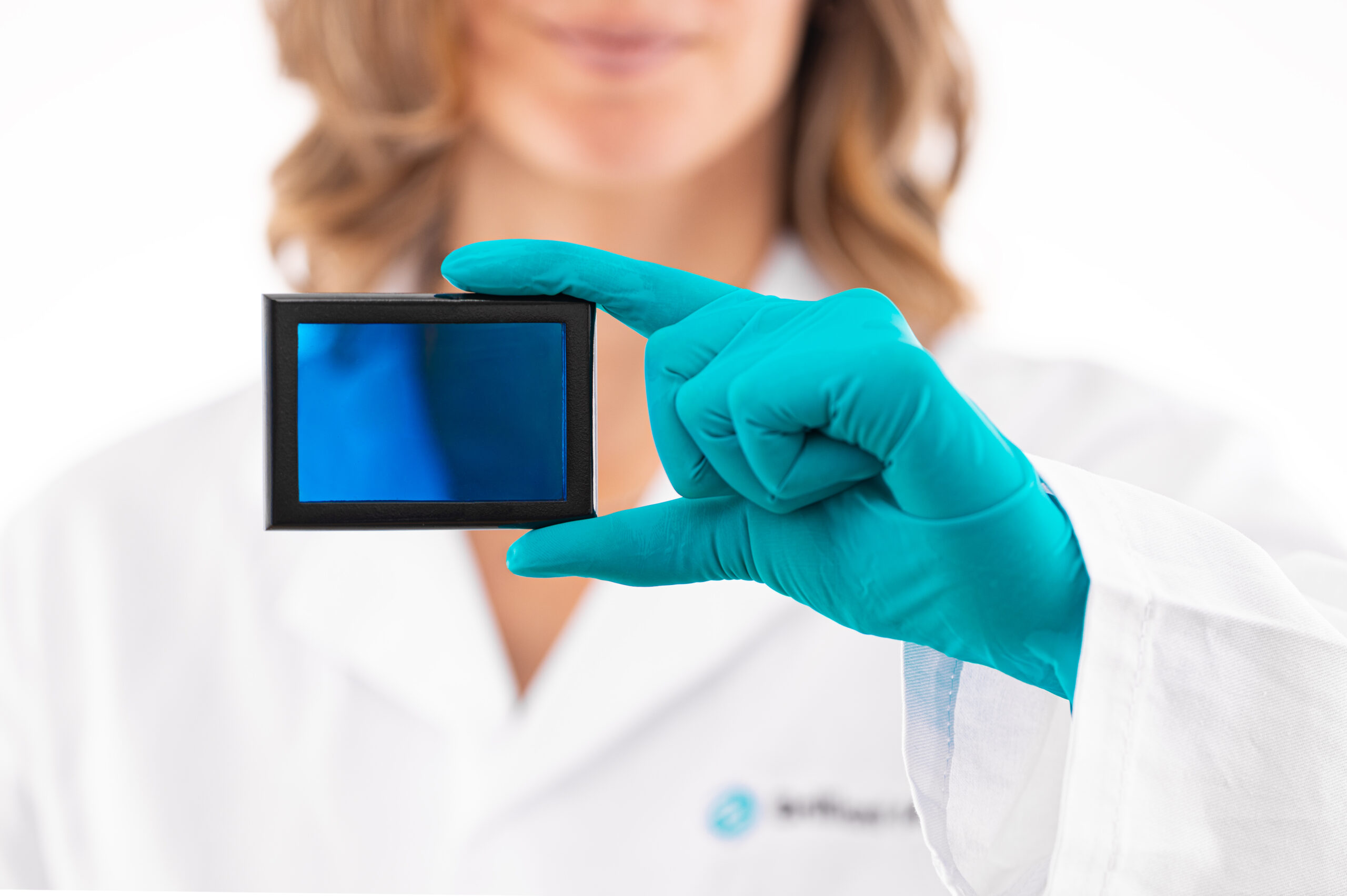
A typical polymer OPV device consists of several thin-film layers stacked together in the following structure:
Despite this complexity, the total active material thickness is incredibly small, on the order of one hundred of a millimeter, giving OPV its distinctive thin-film form factor. Each layer, deposited as an ink through processing methods like slot-die coating, inkjet printing, or other roll-to-roll processing methods, showcases the scalable potential of OPV manufacturing.

Organic Photovoltaics have the potential to disrupt traditional photovoltaic markets significantly, and forward-thinking innovators are presented with an attractive avenue for a sustainable future. OPVs are offering profound environmental benefits, expansive market opportunities in flexible and building-integrated applications, and significant cost-reduction potential. With Brilliant Matters at the forefront of innovative solutions improving panel performance, durability and cost, organic solar cells are on track to deliver on their promise of cheaper, greener, and more versatile solar power.
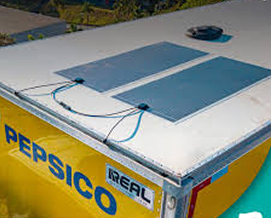
A standout benefit of OPVs is their inherent flexibility and lightness. Unlike rigid silicon solar modules, polymer OPV cells can be printed on lightweight, flexible substrates such as PET, PEN, or even incorporated into textiles. This flexibility translates into versatile applications such as wearable electronics, portable charging solutions for sensors, IoT technologies, curved surfaces on vehicles, or integration into unconventional architectural designs and windows.
A particularly exciting aspect of OPV technology is its potential for semitransparent applications. By fine-tuning the optical properties of the polymer semiconductors, manufacturers can create solar panels that generate power while allowing natural daylight to pass through—perfectly suited for building-integrated photovoltaics (BIPV). OPV can also reduce energy consumption by blocking the heat (IR) from the Sun, reducing the demand for air conditioning while producing electrical energy at the same time.
Imagine office buildings, skyscrapers, or even residential homes with windows that double as solar panels, reducing energy costs while improving aesthetics.

OPVs can significantly lower solar energy costs through simplified and scalable production methods. Unlike crystalline silicon cells requiring expensive, energy-intensive manufacturing, polymer OPVs utilize cost-effective solution-processing techniques suitable for high-throughput, roll-to-roll manufacturing. These processes are analogous to printing newspapers: fast, scalable, and economical.
BM’s printable materials enable manufacturing with low CAPEX investment through scalable, high-speed roll-to-roll printing. This process eliminates the need for expensive vacuum equipment and high-temperature steps. Flexible substrates, solution-based deposition, and rapid curing significantly reduce infrastructure costs. Factories can be smaller, modular, and more agile. Overall, OPV production powered by BM materials requires a fraction of the capital investment compared to silicon-based solar.
Moreover, polymer materials used in OPVs are derived from abundant raw materials, avoiding reliance on scarce elements such as gallium, indium or tellurium, which are common in traditional thin film photovoltaics. Coupled with potential economies of scale and continual material innovation, OPVs offer pathways to drastically reduce photovoltaic costs in the long term.
Job application
Want to take part in challenges that matters? Join us to be part of a brilliant future!