Menu

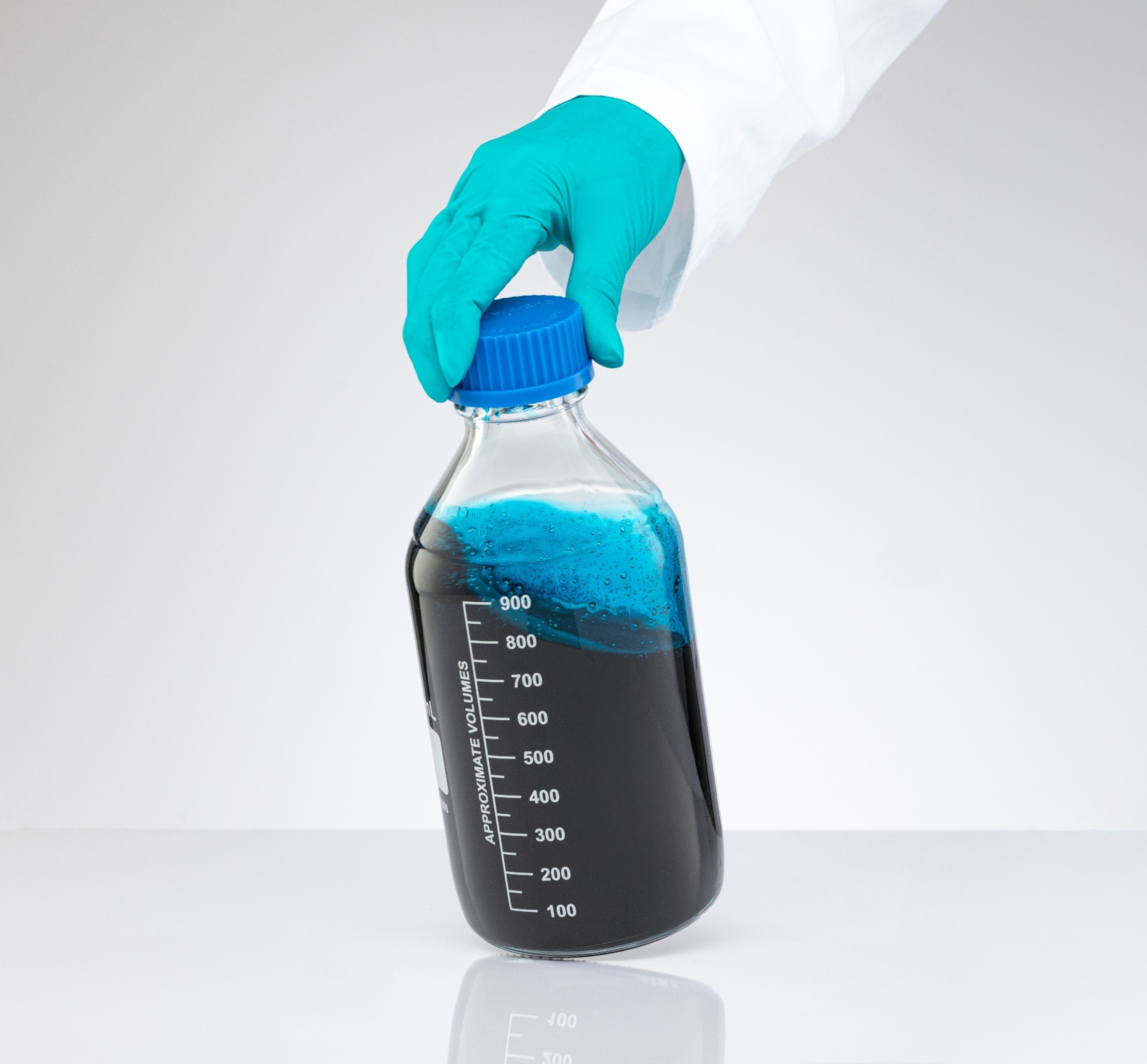
Translating advanced materials into high-performance printable inks is a discipline of its own. At Brilliant Matters, we have mastered the balance between molecular design and the physical requirements of industrial printing. We optimize solubility, viscosity, surface energy, and drying kinetics to ensure seamless compatibility with high-speed manufacturing techniques such as slot-die coating, gravure, and inkjet printing. Beyond printability, our inks are engineered for batch-to-batch consistency, guaranteeing stable device yields and long-term performance — a critical requirement for industrial adoption. We understand the delicate trade-offs between formulation and function, and we deliver materials that satisfy both.
Our inks are designed to combine superior electronic performance, broad processing latitude, and compatibility with industrial-scale printing. Key attributes include:
To enable scalable, high-throughput manufacturing, our OPV inks are formulated with carefully tuned viscosity, typically in the range of 5–50 centipoises (cP), making them compatible with slot-die and inkjet processes. These formulations remain stable throughout extended printing runs, maintaining consistent viscosity and ensuring precise, uniform deposition at high speeds.

Organic photovoltaics represent a third-generation solar technology, with one of their greatest advantages being the ability to manufacture them using roll-to-roll printing. Brilliant Matters’ ink formulations are designed with a wide processing window and consistent quality, making them uniquely suited for the commercial, large-area printing of solar panels.
Unlike conventional coatings, OPV ink formulations demand a much stricter balance, as additives can disrupt the delicate conditions required for high-performance devices. The semiconductor layer is created through a single ink composition containing multiple components that form a bulk heterojunction (BHJ): a nanoscale interpenetrating network of a p-type polymer semiconductor and an n-type organic molecular semiconductor. This fine-scale morphology must be precisely controlled to enable efficient charge separation and extraction.
To ensure this level of precision, every Brilliant Matters material and formulation is systematically tested in OPV prototypes fabricated in-house. This allows us to demonstrate performance during product development while guaranteeing that our quality standards are consistently met — both for coating reliability and for solar panel efficiency.
Job application
Want to take part in challenges that matters? Join us to be part of a brilliant future!